Blog › Cabin Filter Selection
Cabin Filter Selection
Cabin Filter Buying Guide: Particle, Carbon and HEPA Across Market Tiers
Particle, activated-carbon and HEPA cabin filters form a three-tier ladder. Here is how to match each tier to a market and price it for margin.
October 23, 2026 · 5 min read
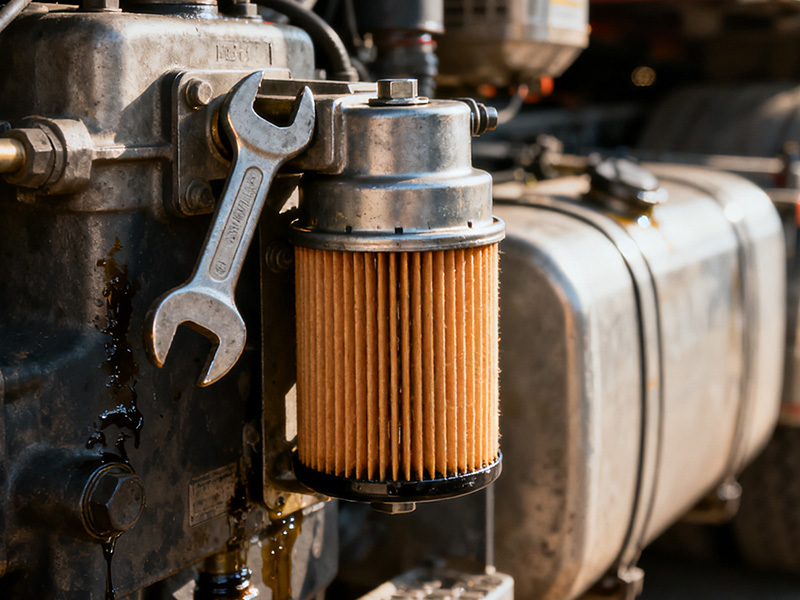
The three tiers as a product ladder
The cabin filter category splits cleanly into three ascending tiers. A particle filter stops dust, pollen and larger debris — the cost-sensitive entry point. An activated-carbon filter adds a carbon layer that adsorbs odors and some gases, from exhaust to industrial fumes. A HEPA-class filter removes a much higher share of fine particulate (a true H13 element reaches ≥99.97% for the most penetrating particle size) and is often combined with carbon in a single premium element.
The tier structure is a ladder, and that is exactly how to sell it: an entry, a mid and a top SKU priced accordingly, so a distributor can move a buyer up one rung at a time. The benefit at each rung — cleaner cabin air — is visible and sellable to the end user, which is why this is the easiest upsell in the catalog.
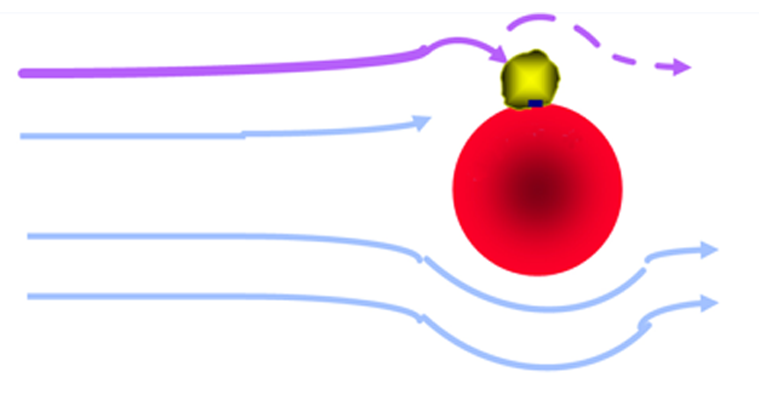
Matching tier to market
Urban air-quality concerns are spreading to every export market, not just Europe. Smog, traffic exhaust and fine particulate are daily realities in the Middle East, Southeast Asia and Latin America. In those markets, a carbon or HEPA filter is not a luxury — it is a defensible product with a clear customer benefit.
The tier mix should follow the market: high-smog urban markets skew toward carbon and HEPA, while rural, cost-driven markets still take the particle entry. Carrying all three lets the distributor serve both ends and price the premium tier for margin.
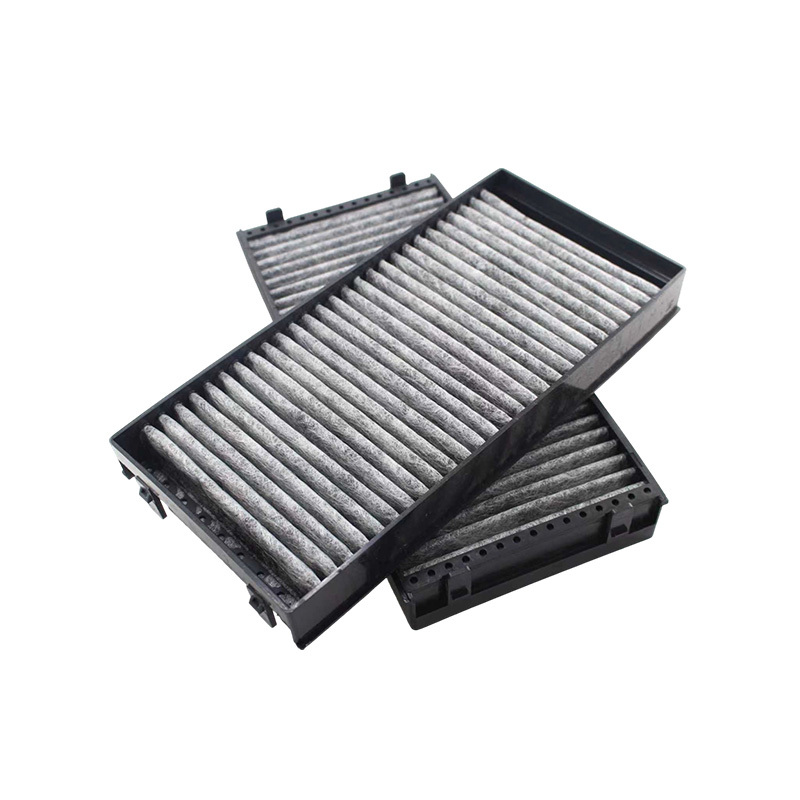
What to verify on the spec sheet
The word “HEPA” is thrown around loosely. A genuine HEPA claim means H13-class media at ≥99.97% for MPPS, tested to a real standard. A generic “99%” without a standard and particle reference is a marketing number. Keep the three lines clearly separated on the spec sheet so the customer knows exactly what they are paying for.
Fitment is the other non-negotiable: cabin filters are rigid panels that must slide precisely into a plastic housing, and a 2–3 mm deviation means a complaint, not a discount. Confirm length, width and height against the OE housing and approve a sample before a full run.
Building the mixed container
The mistake most exporters make is listing only a particle SKU. Carrying a carbon and a HEPA line turns a commodity into a product family, and it gives the distributor a reason to order a mixed container instead of the cheapest single SKU. The premium tiers carry the margin that makes the whole container profitable.
For storage, carbon filters must be sealed in polybags away from solvents and moisture — activated carbon adsorbs from its surroundings and will arrive pre-saturated otherwise. That small discipline protects the product’s entire value.